Répartition par année
🇬🇧 MODERNIZE YOUR CI/CD WITH CI/CD CATALOG
For many years and specifically with the rise of DevOps, CI/CD has become the central point to our applications. CI/CD (Continuous Integration & Continuous Deployment) allows us to build and deploy projects easily and frequently, when you want 😁 At each step of our project, we use CI/CD : from building our project, checking security, and deploying our application.
CI/CD in GitLab can be very easy. Quickly, every developer can initiate a script of CI/CD. If we are in a new project, we can copy past a part of an existing project we work or we worked and the CI/CD runs, it’s great and our application can be built and deployed when or where we want. Imagine the future, when you have done this copy paste on many, many, many projects. And your favorite language or library has a new version impacting your CI/CD, or I should say ALL your CI/CD scripts you create. And imagine several teams in your company make the same, you can have so many CI/CD scripts making the same things. That’s hell !
📺 GETTING STARTED WITH FIREBASE STUDIO
Google announced Firebase Studio, a Cloud Development Environment powerful by AI. I created these Youtube shorts (in French) to introduce you this great platform.
👀 Introduction
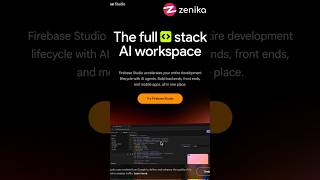
🚀 Start a project

🧑🎨 Prototype your application
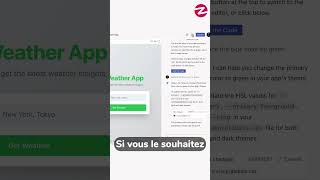
🌤️ Deploy your application
RENDRE SON PODCAST ACCESSIBLE AVEC L'IA AU SERVICE DE LA TRANSCRIPTION
L’Intelligence Artificielle (IA) est partout, de plus en plus utilisée, transformant la manière dont nous abordons nos tâches. Elle se révèle comme un assistant précieux, permettant d’aider les personnes à accomplir plus rapidement leurs activités du quotidien.
Dans le domaine de la manipulation de son en texte, elle nous offre des retranscriptions rapides, mais une intervention humaine reste indispensable pour garantir la justesse et la pertinence du contenu généré.
Dans cet article, nous allons vous parler de notre expérience avec l’IA dans la production de notre podcast Zenikast et plus particulièrement celle de Google : Gemini
IDX BECAMES FIREBASE STUDIO
During the Cloud Next 25, Google announced that IDX became Firebase Studio.
🌤️ The IDX Project
The IDX project was officially launched during the Cloud Next 24. A CDE - Cloud Development Environment - tool that allows you to develop into your browser or on a client application, but nothing else is saved locally on your laptop but in a Cloud. This is one of the most important benefits of the CDE for developers.
🦊 GITLAB - FEATURE FLAGS, A PRACTICAL GUIDE TO CONTROL YOUR FEATURES
✨
Feature flag, also known asFeature toggleis a technique allowing teams to activate or deactivate features in applications without redeploying or editing code.
💡 A Feature Flag ?
Feature flag is a concept essential in modern infrastructures, particularly for projects implementing continuous deployment. They allow code to be deployed to production without being visible or enabled for users. This requires some pertinent tests to ensure that existing features are not affected.
🎄 RETOUR SUR MON ANNÉE 2024
L’année 2024 se termine tranquillement et il est temps pour moi de faire un bilan. J’aime bien faire ce genre de chose, tout au long de l’année je me pose en fin de semaine pour revoir les objectifs de la semaine et organiser celle à venir. Cela me permet de revoir la priorité de mes sujets (ou idées en tout genre). Le faire en fin d’année me permet de clarifier ce qu’il m’attend après quelques jours de congés pour cette fin d’année 😀.
🌤️ IDX AND CLOUD WORKSTATIONS, TWO GOOGLE TOOLS EMPOWERING CLOUD DEVELOPMENT
Are you familiar with Cloud Development Environments (CDEs)? They have been around for over 20 years and have taken advantage of the rise of the cloud to deploy and establish themselves in the developer’s toolset.
🖥️ Develop on the cloud
For my part, I often develop on cloud environments. I was lucky to come across Gitpod in 2019 and I have been using it everyday since, whether for Zenika projects, personal projects or open source projects.
GIVE YOUR MACBOOK A NEW DEVELOPER LIFE WITH CHROMEOS FLEX & CDES
In 2007, during the last days of my studies (wow, that was a long time ago 😅), I bought my first MacBook. No more gaming PCs, this MacBook was going to be my work computer. After using it to develop and experiment different technologies, tools, and frameworks, I was forced to buy a new one, more powerful, to continue my development and photo and video editing activities.
I kept my first MacBook for smaller and less consuming activities until 2020, but I used it less and less as it became obsolete. After a while, even browsers like Chrome could no longer be updated, reducing more and more my usage until it ended up in a corner of my house
🇬🇧 AUTOMATIC DEPLOYMENT OF YOUR PROJECT DEPENDENCIES UPDATES ON GCP, EFFICIENCY VS. COST?
Updating the dependencies of your project is not an easy task. If you have to do this on each side project you have, You’re gonna need a lot of caffeine! 💪.
More seriously, this can take a lot of time especially if you have a lot of components in your scope (side projects, open source projects or for the applications of your company).
This month, I gave a talk with my Zenika colleague Lise at the DevoxxFR conference about Renovate and Dependabot, two great tools to help you automatize and upgrade your dependencies.
✨ DISCOVERING GITLAB DUO 🤖
✨ Artificial Intelligence
Artificial Intelligence (AI) is everywhere: in your email, translation, social networks, streaming, IOT, image generators and for some months, in development tools.
Some people, especially those unfamiliar with software development, might fear that AI will replace developers’ jobs. True? Perhaps, but not anytime soon. This debate will not be part of this blog post.
I prefer asking myself why not use AI to help us to accelerate software development?
🇬🇧 GITPOD CLI CHEATSHEET
Gitpod offers us a Command Lines Interface (CLI) to manage our workspaces. Documentation is available here and I created this cheatsheet to summarize it.

If you discover Gitpod, I created this first Cheatsheet to explain you what it is : Gitpod Cheatsheet
🎄 2023 IS OVER ...
Une nouvelle année se termine. 2023 fut pour moi l’occasion de commencer une nouvelle mission chez un de nos clients dans le domaine bancaire, mais pas seulement 😁
Une nouvelle mission
Rien de mieux que de commencer une nouvelle année en démarrant une nouvelle mission : un rôle de Tech Lead transverse sur plusieurs équipes (8 😅). Un sacré challenge ! Entre l’aspect technique, organisationnel et fonctionnel, l’activité ne manque pas et c’est tant mieux ! Accompagné de Gabriel (jusqu’en juillet) et de Lise de Zenika Nantes, nous essayons de répondre à toutes les attentes des équipes pour améliorer le quotidien, les pratiques tout en amenant de nouvelles choses.
🇬🇧 GITLAB 💚 KUBERNETES - ACT 2
GitLab 💚 Kubernetes : act 2
GitLab likes Kubernetes. This is a long story between these two tools. GitLab has been working to integrate Kubernetes into its platform, enabling you to interact with it without leaving the DevOps platform.
I don’t know if you have already seen or read my old blog post https://about.gitlab.com/blog/2022/06/08/configuring-your-cluster-with-kubernetes-integration/ but things have changed.
The certificate integration is an old story, we will never talk about it again. The agent is in constant evolution and we can find new features and fixes in each release of GitLab. More secure, more performant, it’s constantly evolving.
🇬🇧 🦊 GITLAB - DEFINE AND WRITE JOBS’ SPECIFICATIONS
The “specs” attribute?
The “specs” attribute has been introduced in GitLab CI since the release 15.11 of GitLab (as mentioned in this blog post).
This attribute allows you to invalidate CI when one field typed as “important” is missing.
When should I use the specs attribute?
To illustrate one benefit of using this attribute, let me explain with an example. This simple command allows you to deploy a Cloud Run service based on a Docker image called my-image.
🇬🇧 GITLAB - DEFINE AND WRITE JOBS’ SPECIFICATIONS
The “specs” attribute?
The “specs” attribute has been introduced in GitLab CI since the release 15.11 of GitLab (as mentioned in this blog post).
This attribute allows you to invalidate CI when one field typed as “important” is missing.
When should I use the specs attribute?
To illustrate one benefit of using this attribute, let me explain with an example. This simple command allows you to deploy a Cloud Run service based on a Docker image called my-image.
🇬🇧 K6, A LIBRARY THAT WANTS TO BREAK YOUR APPLICATIONS
k6 is an open source tool created by Grafana Labs that allows you to easily execute performance tests written in Javascript.
Installed with apt, dnf, brew, choco or Docker, k6 is available for every type of system or configuration.
My first test
The first step consists of creating a Javascript file, for example _my-first-test.js_. This will contain a function querying the HTTP service you want to test. For example :
export default function () {
  http.get('https://test.k6.io');
  sleep(1);
}
This test can be executed using this command: _k6 run my-first-test.js_. It generates a report in your terminal with some default metrics.
🇬🇧 CLOUD SEED - DEPLOY FASTER WITH GITLAB 🚀
Were you at the Cloud Next in October? This big annual Google event where a lot of new features around Google and its cloud platform GCP are announced. This year, there was one linked to GitLab : Cloud Seed.
⛅ 🌱Cloud Seed ?
What is Cloud Seed? This is a new, open source project launched by GitLab Incubation at the end of 2021 and lead by by Sri Rangan.
The objective of Cloud Seed is very simple. It’s to accelerate deployment of your application from GitLab to Google Cloud Platform. This project was opened first for beta testers, we were less than 100 people to try out this project and give some feedback.
🇬🇧 A NEW GITPOD TEMPLATE FOR GOOGLE CLOUD
📚 My projects on Google Cloud Platform
Some of my projects are deployed on Google Cloud Platform. Mainly in Java, I deployed a lot of functions on Cloud function. This service is so useful for quickly deploying a short function in the cloud. Sometimes I also deploy applications with App engine, it scans your application, detects the language and deploys it without any configuration. Handy for deploying a component without creating and configuring any Docker file. Since 2019, another service has been created, its Cloud Run. This serverless platform allows you to deploy containers easily. Before 2022, I only used it for one test.
DÉVELOPPEURS, FAITES EXPLOSER VOS APIS 🧨
Cet article fait suite à une présentation faite aux Human Talks en septembre 2022. Les slides sont disponibles ici.
Pendant ma mission chez RCA en 2021/2022, j’ai intégré une équipe travaillant sur des API publiques mises à disposition derrière un API Manager, Gravitee. Cette plateforme permet, entre autres, de contrôler et de sécuriser nos APIs. Par exemple, le “rate limit” consiste à limiter le nombre d’appels à une API dans un intervalle de temps donné.
🇬🇧 GITPOD CHEATSHEET
Are you familiar with Gitpod? I offer you a Cheatsheet to discover this awesome tool 🤩
